Latest News
2027 Chrysler Pacifica Review2026 Ford Ranger Review
The 2026 Ford Ranger continues on with strong engines, useful features, and a clean cabin. It stays easy to drive and tow with, while up-to-date tech helps it stand out among midsize trucks like the Tacoma and Colorado.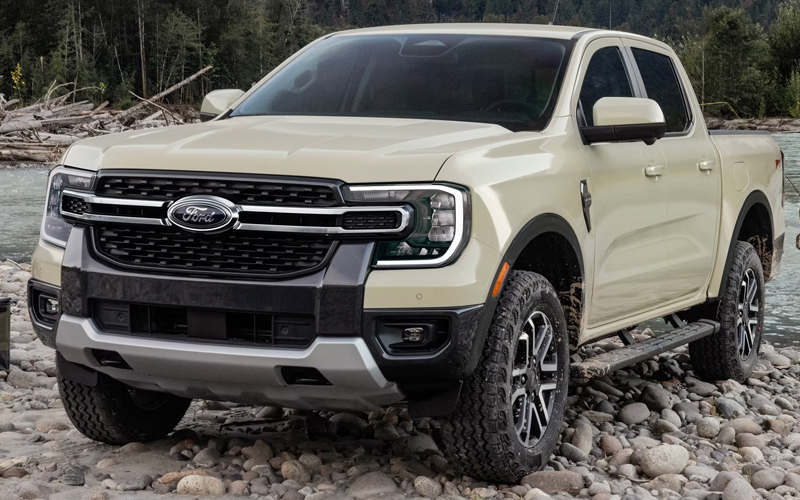
Overview
The 2026 Ford Ranger is part of the fifth generation of the pickup that was introduced in 2024, mainly rivaling the Chevy Colorado and Toyota Tacoma. To see our latest Chevrolet Colorado review, click here. But first, back to the Ford Ranger.
There aren’t many changes to this model, but the FX4 Off-Road package is now optional on the base trim. That package includes specialized shock absorbers, underbody skid plates, all-terrain tires, and electronically locking rear differential.

Carsforsale.com Score
8.25/10
Powertrain
Score
8.75/10
Interior
Score
8/10
Technology
Score
8.25/10
Value
Score
8/10



2026 Ford Ranger Powertrain 8.75/10
This Ranger model uses a 10-speed automatic transmission on all three of its engines. First up, there’s a 2.3-liter turbo four‑cylinder. It makes 270 hp and 310 lb-ft of torque. The Environmental Protection Agency (EPA) estimates that this setup gets 25 miles per gallon (MPG) on the highway and 21 MPG in city driving.
A stronger 2.7-liter twin-turbo V6 is also available. It offers 315 hp and 400 lb-ft of torque. It’s not as fuel efficient, getting 23 MPG on the highway and 18 MPG in the city. Both of those engines make the 2026 Ranger capable of towing up to 7,500 lbs. when properly equipped.
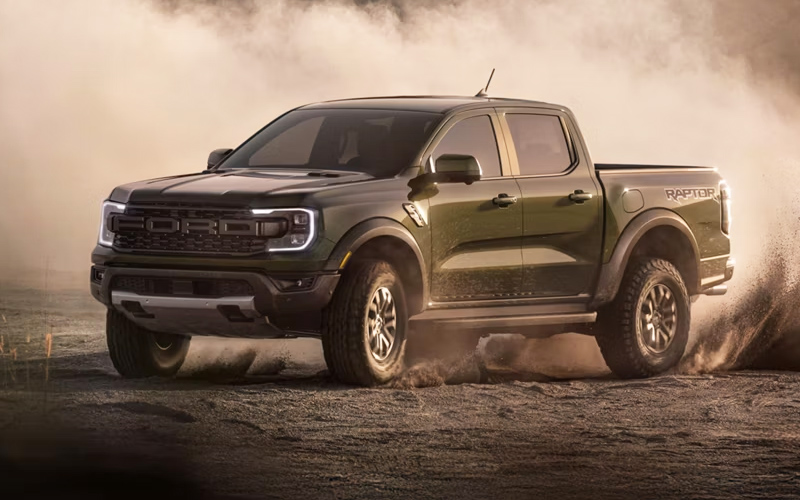
Then there’s a 3.0-liter that’s available on the off-roading 2026 Ford Ranger Raptor. It puts out 405 horsepower and 430 lb-ft of torque. There’s no MPG estimate available with that engine. The Raptor is specifically tuned for rougher rides, whether it’s gravel roads or literal off-road trails. Because of this setup, towing drops to 5,510 pounds.
2026 Ford Ranger Interior 8/10

This cabin feels clean, simple, and still modern enough. Seats support long rides behind the wheel, controls are within easy reach, and materials improve as you climb the trim ladder. Soft-touch pieces and special stitching appear on models like the Lariat and Raptor. For other passengers, the second row has enough room for adults to fit without feeling tight.
The truck bed and various cabin storage pockets help carry tools, luggage, camping gear, and other work or vacation items. Cargo numbers vary by cab and bed length, but the layout is useful across the lineup.
2026 Ford Ranger Technology 8.25/10
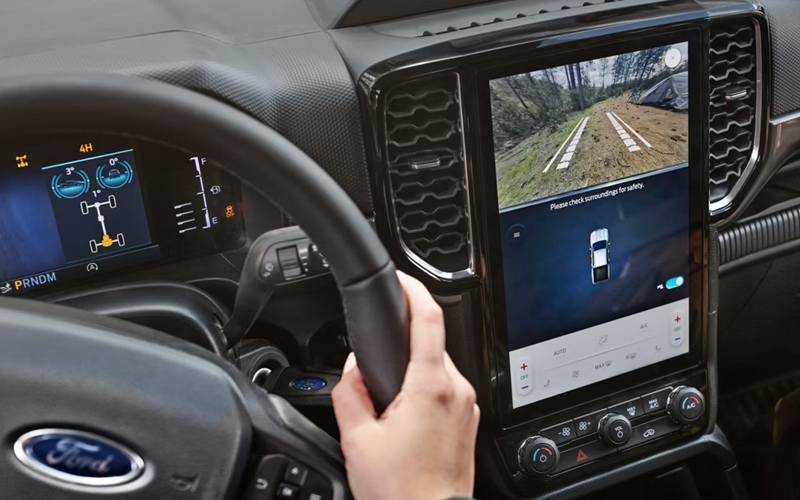
A large 10-inch center display anchors the dashboard. Screen size grows with trim level, up to 12 inches. Standard phone integrations include Apple CarPlay and Android Auto. A wireless charging pad is available or standard at every trim level. So are multiple USB A and C ports.
Ford isn’t exactly generous with driver aids that are standard across the lineup. Automatic emergency braking with pedestrian detection, cruise control, and post-collision braking are standard on the base XL trim. To get other features, like the blind-spot monitoring, lane-keeping assist, front parking sensors, adaptive cruise control, and auto high-beam headlamps, you’ll need to go up to the XLT and Lariat.
We’ve got to talk about some of the bed tech, too. The 2026 Ranger has optional tools like LED bed lighting and Pro Power Onboard, which has 400 Watts of power to run small electronics at a worksite or campsite.
2026 Ford Ranger Value 8/10
The Ranger’s value story starts with the XL trim at $33,350, which gives drivers the turbo four‑cylinder engine, cloth seats, and an eight-inch touchscreen with a few tech integrations.
Moving up to the XLT at $35,375 doesn’t add much other than navigation, blind-spot monitoring, an auto-dimming rearview mirror, and a 360-degree camera. It opens up options, though. For example, drivers have the option to increase the center display to 12 inches, to add a wireless charging pad, to add 10-way power-adjustable driver’s seat settings, and to get the 2.7L V6 engine. You’re increasing the price with each feature you add, but you’ve at least got the choice to do it.
The Lariat adds the most comfort and tech without jumping into Raptor territory. Outside are a chrome center bar grille, body‑colored door handles, and heated, power‑folding side mirrors. Inside, is a power‑sliding rear window, dual‑zone temperature control, and larger 12‑inch center and cluster displays.. Front parking sensors and adaptive cruise control help round out the safety features.
At the top sits the Ranger Raptor at $57,070, built around a 405 hp twin‑turbo V6, an off‑road suspension, and trail‑ready cabin touches that set it apart from the rest of the lineup. That includes headlights with LED projectors, two tow hooks, a skid plate, dual rear exhaust, all-weather floor mats and a side step.
Ford’s warranty support includes 3 year or 36,000-mile bumper‑to‑bumper and 5-year or 60,000-mile powertrain coverage. Other 5-year warranties include the safety restraint system, aluminum body panels, sheet metal corrosion, paint adhesion, and roadside assistance.
Trims & Pricing
2026 Ford Ranger Final Score: 8.25/10
The 2026 Ford Ranger continues on with helpful tech, a comfortable cabin, and strong engines. The engine choices probably helped put the 2025 Ranger on our list of the Best Mid-Size Trucks of 2025. It handles daily drives with ease and has the muscle for some towing or, in the Raptor, hitting a trail. Compared with trucks like the Tacoma and Colorado, the Ranger stands out with a broad engine lineup and easygoing ride. It stays true to the midsize segment’s needs while giving drivers room to explore new ground.